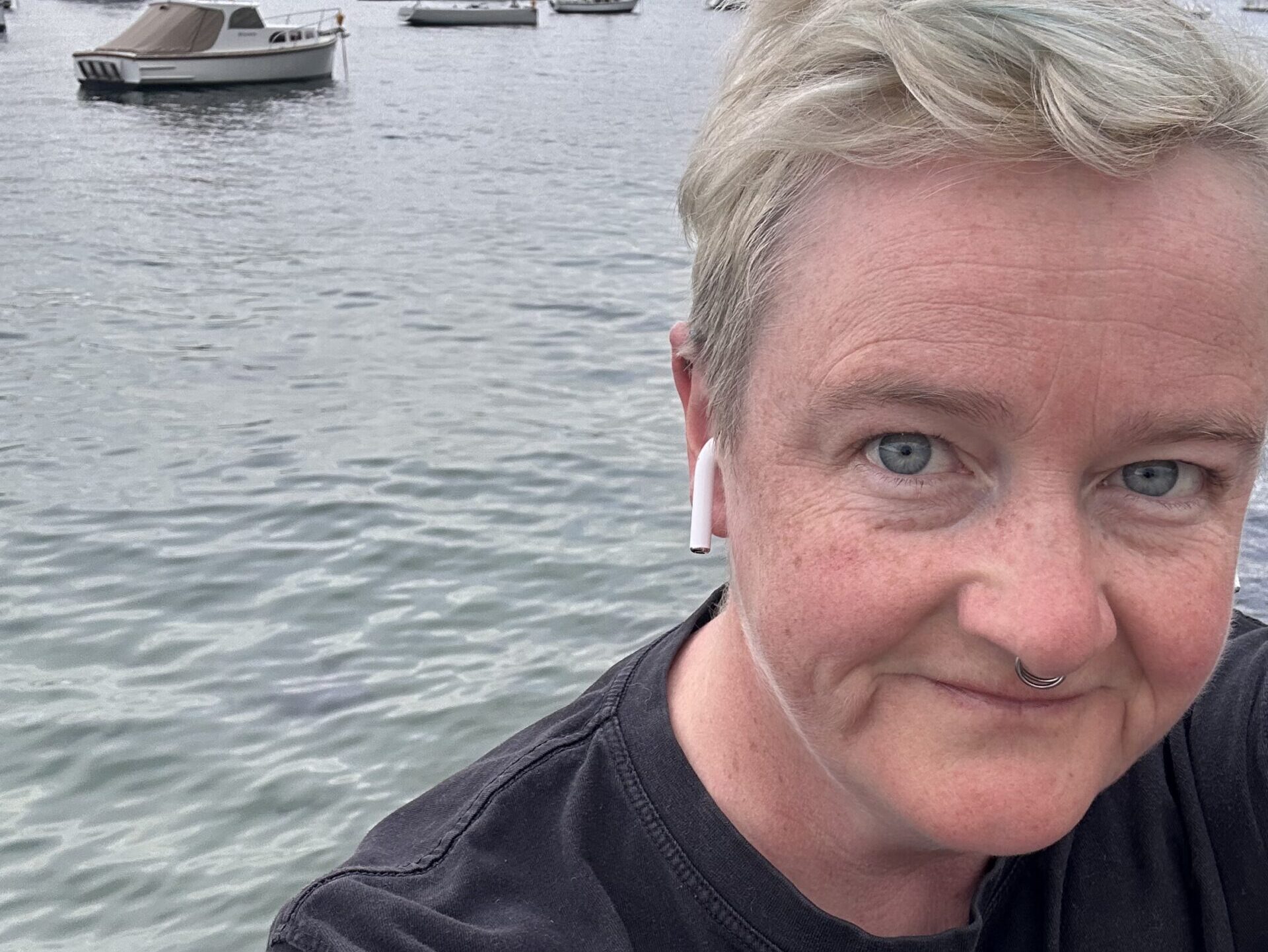
EDV Board Director Belinda Bravo is going to Run Melbourne in July 2026 to raise money for free eating disorder care. Belinda shares what running has meant for her, nearly three decades since she opened the door to eating disorder recovery.
“Before I learnt how to drive a car, I used to dream about driving. I would open the car door, jump in, and take off, with no sense I had never driven before. After I learnt to drive, I started dreaming about flying. I would jump into the air, arms spread, and fly like a bird, again with no feeling I had never done it before while I was awake. When I close my eyes now, I have started to dream about running. It feels natural – like breathing – and like what it is what I am supposed to do; what my body can do.”
I have lived with an eating disorder since I was 15. I remember my family being confused and sometimes angry that the health service system was so impenetrable and unresponsive to their calls for help. It compounded my sense of guilt that I was creating a problem – that I was a ‘problem.’
With no support in the community, I had a series of inpatient admissions as a teenager, some of which required me to stay in bed all day, except for designated shower breaks. Even now, as a 46-year-old woman, I have never since experienced such chronic isolation and powerlessness, in an environment that was unfamiliar and sometimes volatile.
One of the most enduring challenges from that time was the concept of recovery embedded in my care: that I would ‘recover’ as soon as my weight achieved a normal range. While clinicians may have wanted to engender a sense of hope for me, this proved elusive. Not only once I regained some weight, but in the intervening years since.
Recovery has been not a destination but a lifelong journey full of ‘good days’ and ‘not so good days’. In contrast to what I was led to believe back then, I still live each day with the ‘white noise’ of disordered eating. But now, I know I can continuously work to structure the right support and create the best relationships, to retain more of the good days and less of the not so good.
You might be asking, then, what does this have to do with a running fundraiser for Eating Disorders Victoria? Firstly, I know firsthand how important organisations like EDV are to communities and to families who have questions and don’t know where to turn.
Importantly, I also know that so much good work can be achieved when people living with an eating disorder can get care in place, surrounded by their loved ones. Recovery happens in communities. By delivering community-based services, EDV addresses a key gap in an otherwise fragmented service system.